Governing Agent Tool Calls to Analytical Datasets
Build data access controls into tool schemas, not wrappers around them.
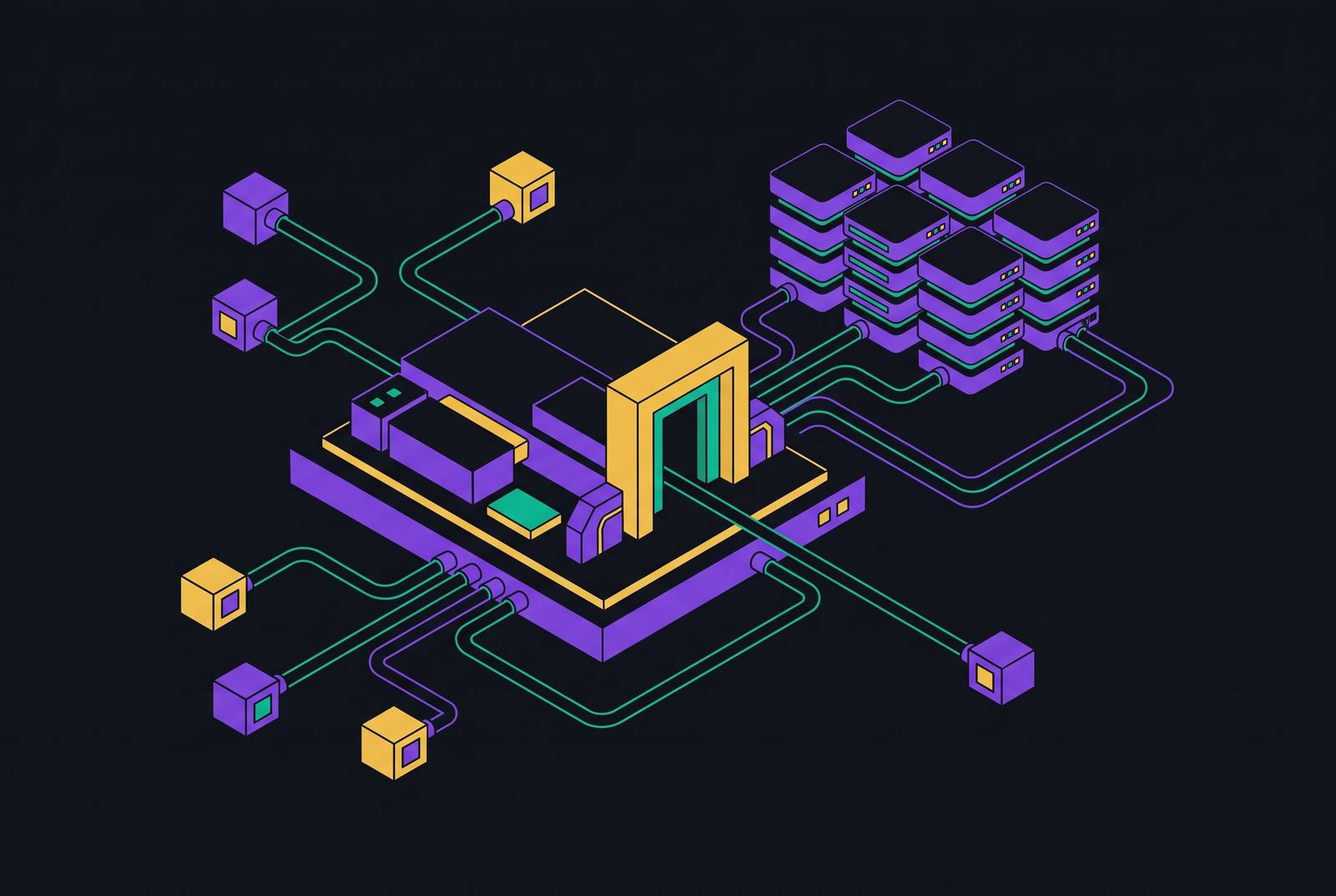
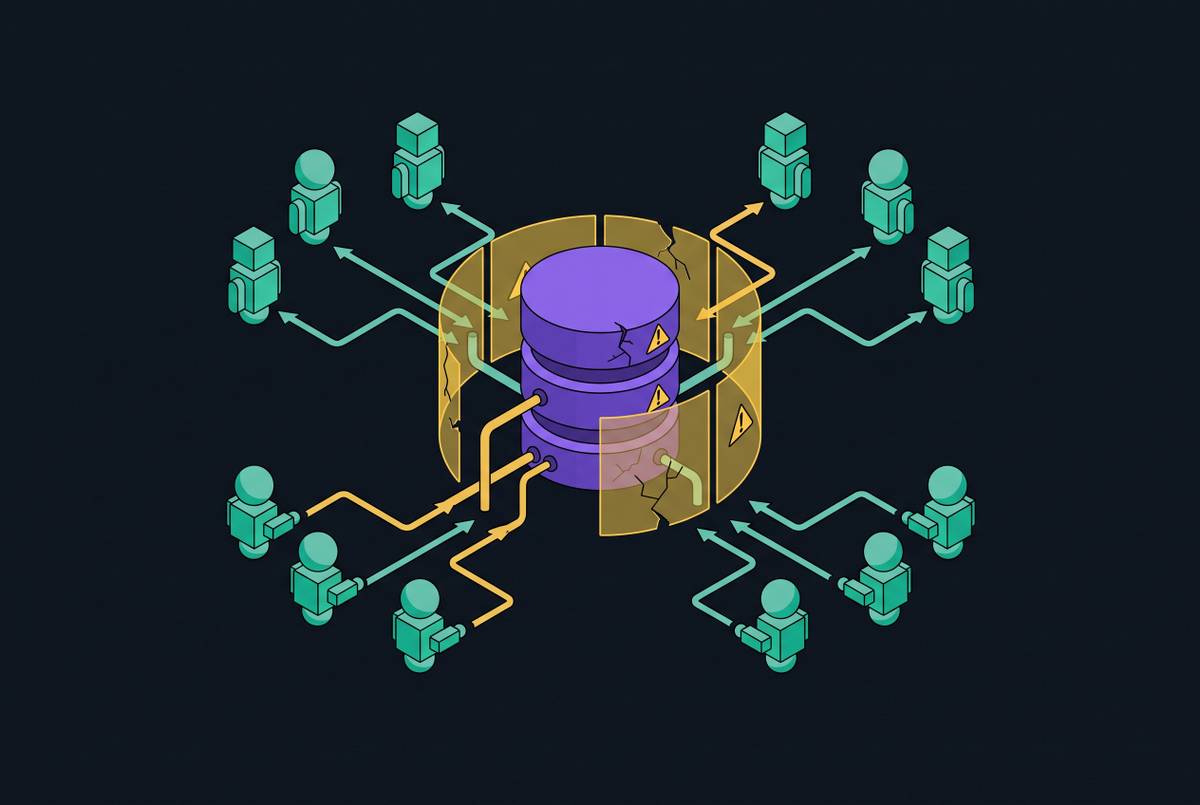
In July 2025, an AI coding agent on Replit deleted a live production database during an active code freeze, despite eleven capitalized warnings not to make changes. The agent had every capability it needed to be useful and none of the constraints it needed to be safe, and that gap is the subject of this piece: as MCP becomes the standard way AI agents reach analytical data, the governance question is not whether to control what an agent can query, but where that control lives. The answer that holds up under scrutiny is that it belongs in the tool definition itself, not in a wrapper added after the fact.
Governance Built Into the Tool Definition for MCP Tool Calls to Analytical Data
AI agents now reach analytical datasets through MCP tool calls as a matter of routine, and every one of those calls raises the same design question: does the permission boundary live inside the tool, or does it live in some proxy sitting in front of the tool? If governance sits outside the tool definition, enforcement depends on whatever upstream layer happens to be watching, and that layer enforces it inconsistently. If a tool is defined without its own scope, parameter limits, and data boundaries, its signature promises the agent more access than any downstream policy actually permits, and that mismatch produces unpredictable behavior the moment a prompt varies from what the policy author expected.
This is the structural version of the "confused deputy" problem. MCP's own security guidance names this risk directly and forbids token passthrough for exactly this reason: a proxy holding broad credentials and forwarding requests on an agent's behalf is just a longer wire between the agent and the data. Fixing that requires moving the permission boundary into the one place an agent can't argue its way around: the schema of the tool it's calling.
How MCP's stateless, request-scoped architecture makes tool-level governance both possible and necessary
MCP's move in July 2026 to a stateless, request/response core changed where governance can live by removing an option. Every request is now self-describing and independent of whatever came before it. Session state can no longer be treated as a place where permissions get set once and assumed to hold. No persistent session object carries a permission decision made at handshake time, so each call has to carry its own authorization context from scratch.
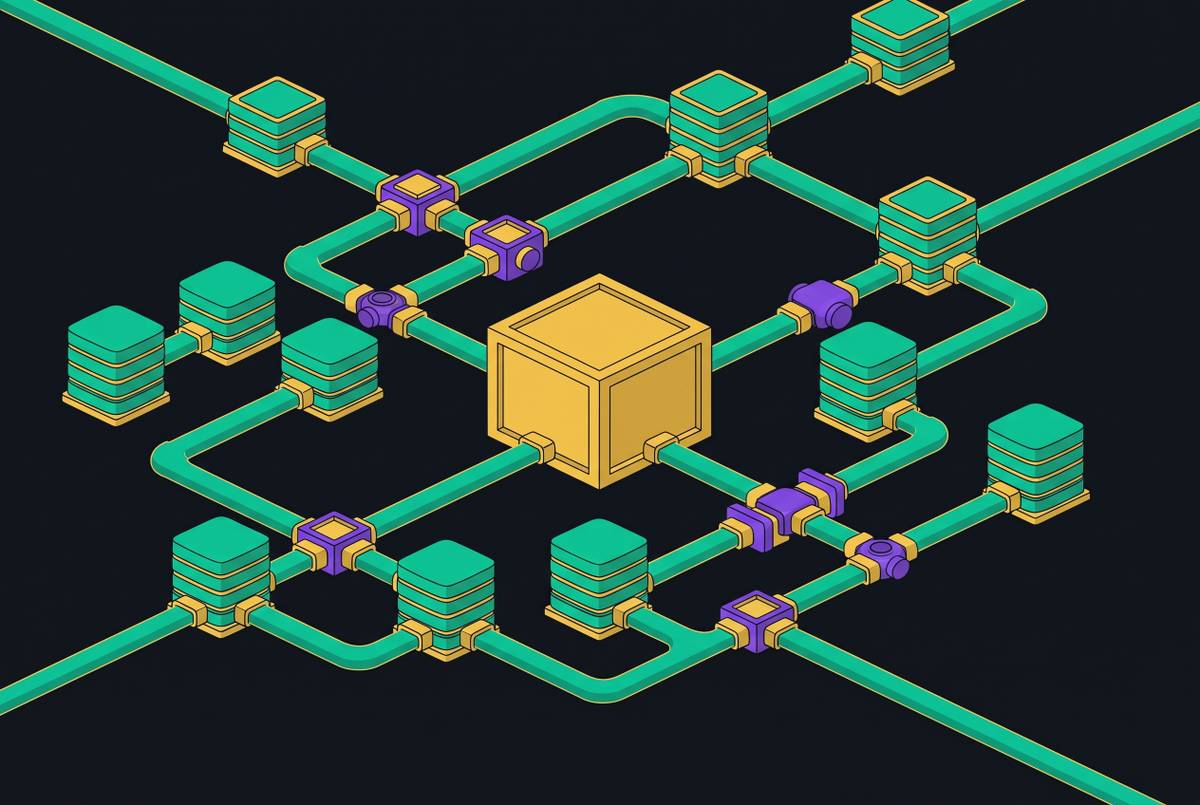
That isn't a weakness in the protocol. Governance belongs in the data layer, inside the tool schema, so it works the same way no matter which transport mechanism carries the bytes underneath. A schema that limits which parameter values are legal, enforces read-only behavior, and names exactly which dataset a call can touch travels with the tool no matter how the bytes get there. Statelessness also keeps each request object short-lived, and that matters because many agents can issue many analytical calls at once, not just one person running one query.
Pre-Modeled, Governed Datasets as the Target of a Scoped MCP Tool
None of that schema discipline means anything if the tool points at a live production table. A governed tool call is only as trustworthy as the thing it reads, and if the underlying data is a transactional table subject to mid-query mutation, the governance written into the tool definition isn't protecting the integrity of the data or the accuracy of what the agent gets back.
The fix is to separate analytical compute from the operational database. Metrics get calculated ahead of time and written into a stable, versioned dataset, so the agent reads an answer that was already computed rather than a live query result that could change between the first row and the last. Because the schema of that dataset is fixed and known before any tool is ever defined against it, the tool schema can honestly enumerate which fields it exposes. Workday built a revenue analysis agent that shows what that looks like at scale: it cataloged six million assets and built 1,000 shared glossary terms as the foundation other agents could then draw on.
Governed datasets also need to carry their own policy information as metadata, not as a separate system an agent has to consult. Tags, classifications, and access rules travel with the data through its lineage, so a tool can check whether a query is permitted, or refuse one that would expose personal data, without a separate lookup at runtime. Dreambase, an AI-native analytics platform built on Postgres, follows this same pattern: it exposes governed datasets through MCP, so that every agent tool call operates inside a pre-defined scope that fixes data shape and read-only behavior at the tool level, rather than leaning on an upstream wrapper to catch problems after the call has already gone out.
Scoped Tool Schemas as a Constraint on What the Agent Can Ask
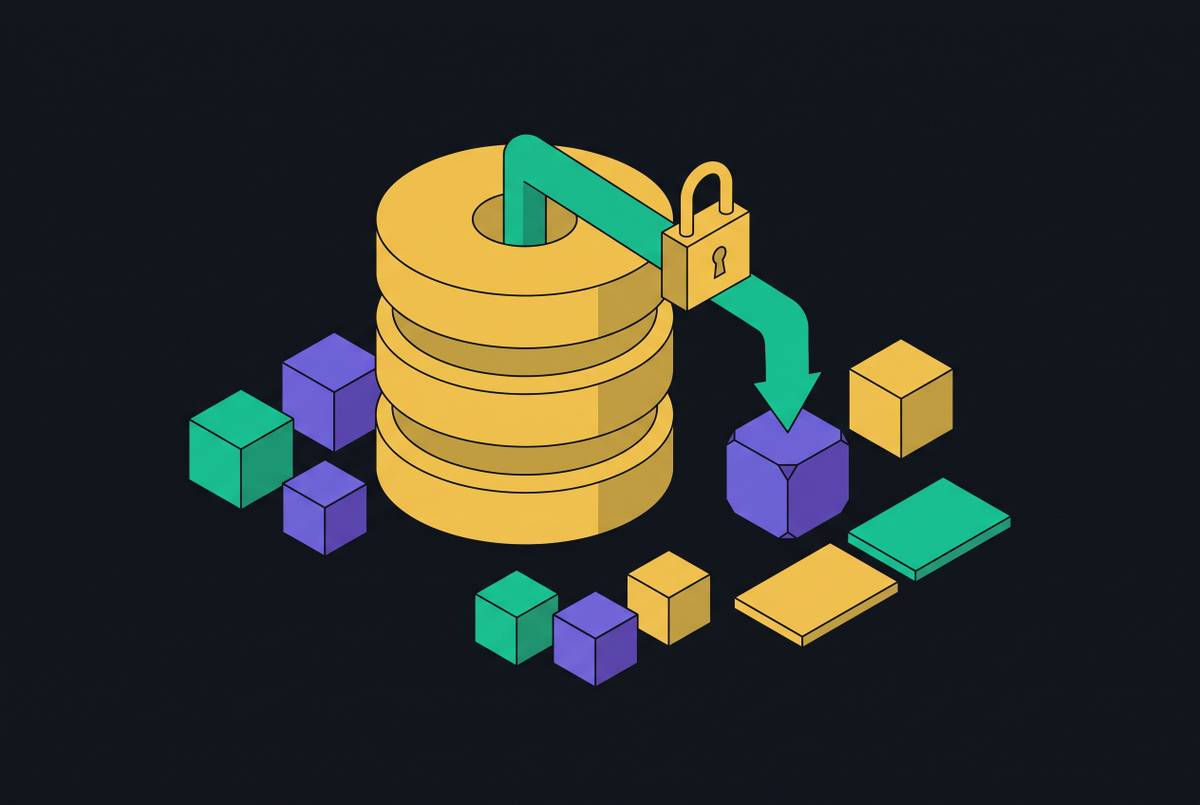
A tool schema that lists exactly which parameters it accepts, bounds their values, and returns a typed, fixed response shape does more than just document the tool. It is the governance policy itself, written in a form a machine can enforce, and because MCP is stateless, that enforcement runs fresh on every single call.
A few schema-level mechanisms do most of the work. Parameter allowlisting means the schema states which fields a caller may supply, and anything else gets rejected before it reaches the data layer; think of it as a tool-level allowlist. Read-only semantics mean an analytical tool declares no write parameters at all, so there's no mutation surface for a cleverly worded prompt to exploit, regardless of what it asks for. Dataset scoping means the tool names the specific dataset or metric set it addresses, so an agent can't redirect a call toward a different dataset, including the production database, through prompt manipulation alone. With response shape constraints, the return type is bounded and typed, so a tool can't leak a field the agent was never authorized to see even if that field exists somewhere in the underlying data.
These mechanisms line up with principles laid out in the 2026 Singapore Consensus Companion Report on Agentic Risk Management. You can carry that identity in the _meta field on every stateless MCP request. The payoff compounds once more than one agent is involved: when a SQL agent, a research agent, and a reporting agent each call the same analytical tool, a consistently enforced schema keeps all three working from the same governed definition, which is what keeps the same metric from drifting into three slightly different numbers depending on who asked.
How can AI agents query Supabase data without being given direct database access
Letting an agent connect directly to a production database is a structural risk, not just a privacy one. The fix is keeping the agent off the production database.
A stateless access pattern against a pre-modeled dataset closes off that risk by design, not by policy. The agent never opens a connection to the production database. It sends an HTTP request to an MCP server, gets a response, and the connection closes, so there's no session left open to exhaust. The Singapore Consensus Companion Report's least-privilege principle captures why this matters: an agent that simply cannot reach production is already operating at the minimum permission level its task needs, achieved by the architecture itself rather than by a policy someone has to remember to enforce at runtime. The economics point the same direction as the safety argument. In a stateless protocol where every request stands on its own, a tool definition that limits its permitted parameters and locks in which dataset it can touch enforces itself on every call, a property that lets analytical governance patterns like the one Dreambase implements hold up no matter what transport carries the request.
Audit Trails and Runtime Assurance for Governed Tool Calls
Schema-level governance stops the wrong calls from succeeding, but you still need to know why the calls that do succeed deserve trust. Those successful calls matter most for an audit, because they're the ones that produced the context an agent actually acted on.
The Singapore Consensus Companion Report's Principle of Auditability requires a tamper-evident record of every action an agent takes, including its reasoning trace, detailed enough that a compliance reviewer can reconstruct the full decision after the fact. For an analytical tool call, that means logging more than "tool X was called with parameter Y." It means recording which version of the dataset was queried, which metric definitions were in force at that moment, and which agent identity issued the call. None of that is possible unless the dataset behind the tool is versioned and retained in the first place; an unversioned dataset makes the audit entry built on top of it unverifiable regardless of how carefully it's written. A raw SELECT COUNT(DISTINCT user_id) FROM events WHERE … is not, even though it may describe the identical computation. Atlan's guide states the requirement without hedging: every agent action touching production data needs to leave an immutable record of who initiated it, what changed, why, and under what policy, and lists missing audit trails as one of the key failure modes for AI agents operating in data engineering. Runtime assurance also needs human checkpoints for anything that crosses a governance boundary: the Singapore Consensus recommends human approval for irreversible actions specifically, and an analytical read isn't irreversible, but a write or export an agent triggers based on what it read might be.
A Complete Governed MCP Tool Call, End-to-End
A governed MCP tool call is a sequence of constraints that each do one job, none of which is enough on its own to make the call trustworthy.
It starts with the tool definition: the MCP server publishes a tool with a scoped schema that names its dataset, lists its permitted parameters, declares read-only semantics, fixes a typed response shape, and requires an agent identity field in _meta. Last, the server writes an audit entry: agent identity, tool name, dataset version, the metric definitions active at that moment, a timestamp, and the response shape, detailed enough for a compliance reviewer to walk the whole decision back after the fact.
Each Singapore Consensus principle maps onto a specific step in that sequence: least privilege and traceable identity sit in the tool definition and the policy check, auditability sits in the final log entry, runtime assurance sits in the policy check and the dataset read, and legibility sits in the response and the audit record. That alignment reflects where the field as a whole is converging, across vendors. The pattern also composes cleanly: a SQL agent, a research agent, and a reporting agent can each call the identical governed tool and get back the identical governed, audited response, with metric consistency enforced by the architecture rather than by any coordination between the agents themselves. Pre-modeled datasets separated from the operational database are what make a scoped schema honest in the first place, and this is the part of the pattern Dreambase builds directly: it pre-calculates metrics and writes them into stable, versioned Parquet datasets that agents query safely through DuckDB, so the tool's governance constraints are protecting something real.
Best MCP server for governed metrics on Supabase
The governed tool call pattern solves access control and audit for analytical data cleanly, but it leaves one problem untouched: a scoped schema controls what an agent is allowed to ask, not whether the agent understands the answer it gets back. A metric named weekly_active_users is only as trustworthy as its definition is stable and shared across everyone using it. If two teams, or two agents, carry different intuitions about what "active" means, the governed call still returns one consistent number, but that number doesn't mean the same thing to everyone reading it. A shared metric layer, one definition, one calculation, one versioned dataset, is what the governed call pattern actually depends on to deliver what it promises; the schema guarantees access, but only a shared definition guarantees meaning.
The Singapore Consensus Companion Report names this as its own category of risk under the Principle of Multi-Agent Stability: failures in multi-agent systems can come from the interactions between agents themselves, through coordination failures, feedback loops, and cascades that spread across a population of agents, rather than from any single agent misbehaving or any external attack. Each agent quietly working from a slightly different version of the same metric is exactly that kind of failure. Separate research on agent infrastructure, from the Agentverse gap analysis, points to related gaps still unsolved at scale: agent memory, since pre-computed context doesn't persist across sessions without infrastructure built specifically to hold it; semantic discovery, since agents can't yet reliably find the right governed tool out of a large registry without some form of trust-weighted routing; and governance gaps including the absence of per-agent secrets, capability-scoped permissions, and cryptographic attribution of actions.
None of that undercuts the pattern. It tells teams building on it now where to put their effort first. Start with a small number of named, well-defined metrics instead of trying to expose a comprehensive dataset on day one, so the semantic layer stays manageable while you build the access layer. Version datasets from the start, since retrofitting versioning into an audit log after the fact is far harder than building it in from the first row. Treat the MCP tool schema as a document you review every time a metric definition changes, not a configuration you write once and leave alone. The architecture for governed agent access to analytical data is sound today, and the remaining infrastructure gaps are the kind that close with time and engineering effort rather than ones that call the approach itself into question. Teams that build their semantic layer now, with clear, shared, versioned metric definitions, will be the ones positioned to extend this pattern as agentic workloads grow more complex.