Semantic Metrics Contracts as the Access Boundary Between AI Agents and Raw Supabase Tables
Governed metric definitions keep agents from guessing at Supabase data.
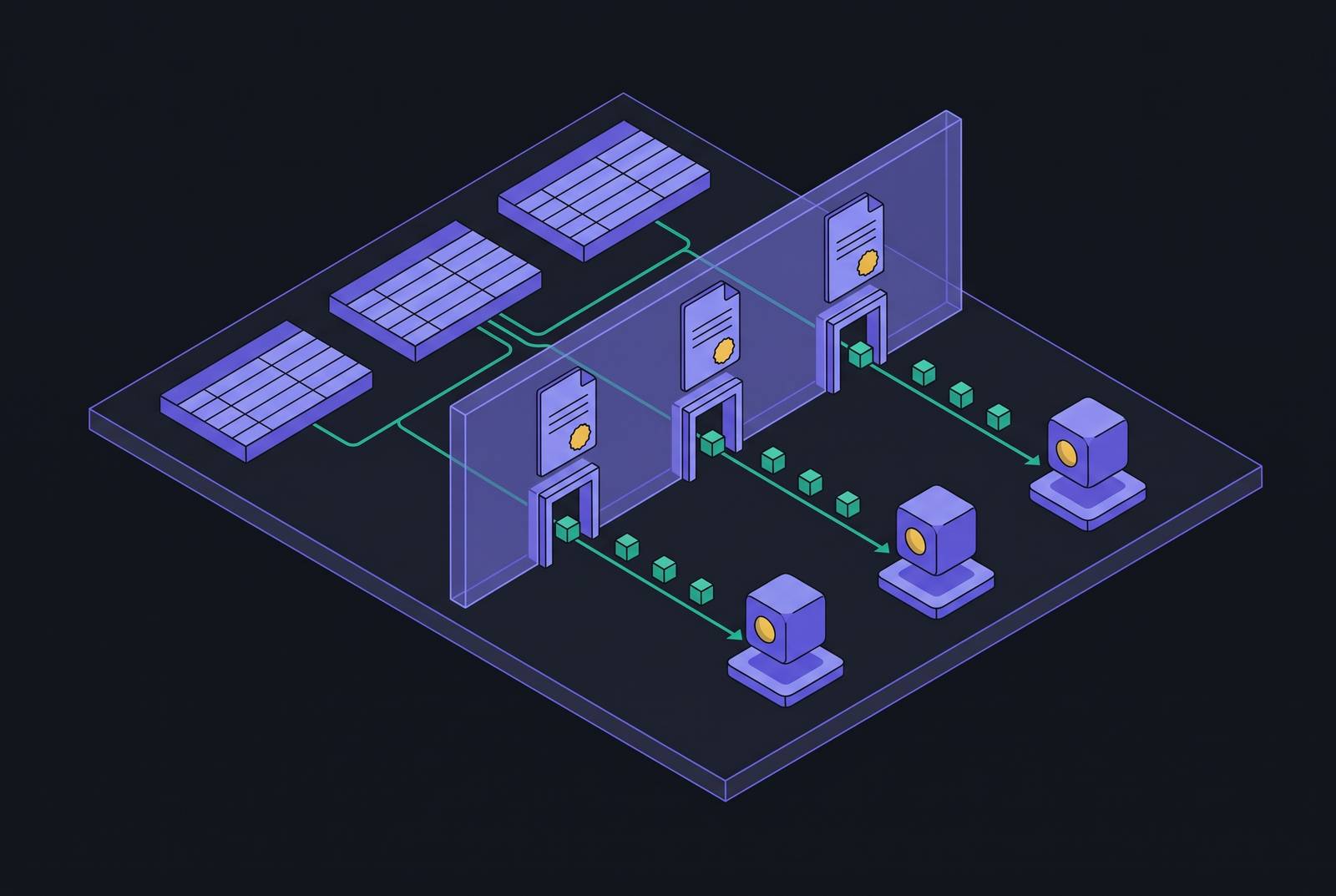
AI agents should query Supabase through an MCP server backed by governed analytical datasets. A semantic metrics contract sets out how each metric is calculated, its allowed dimensions and provenance, and the access policies that apply before the agent asks a question.
Why connectivity is not the same as meaning — and why that gap is now costly
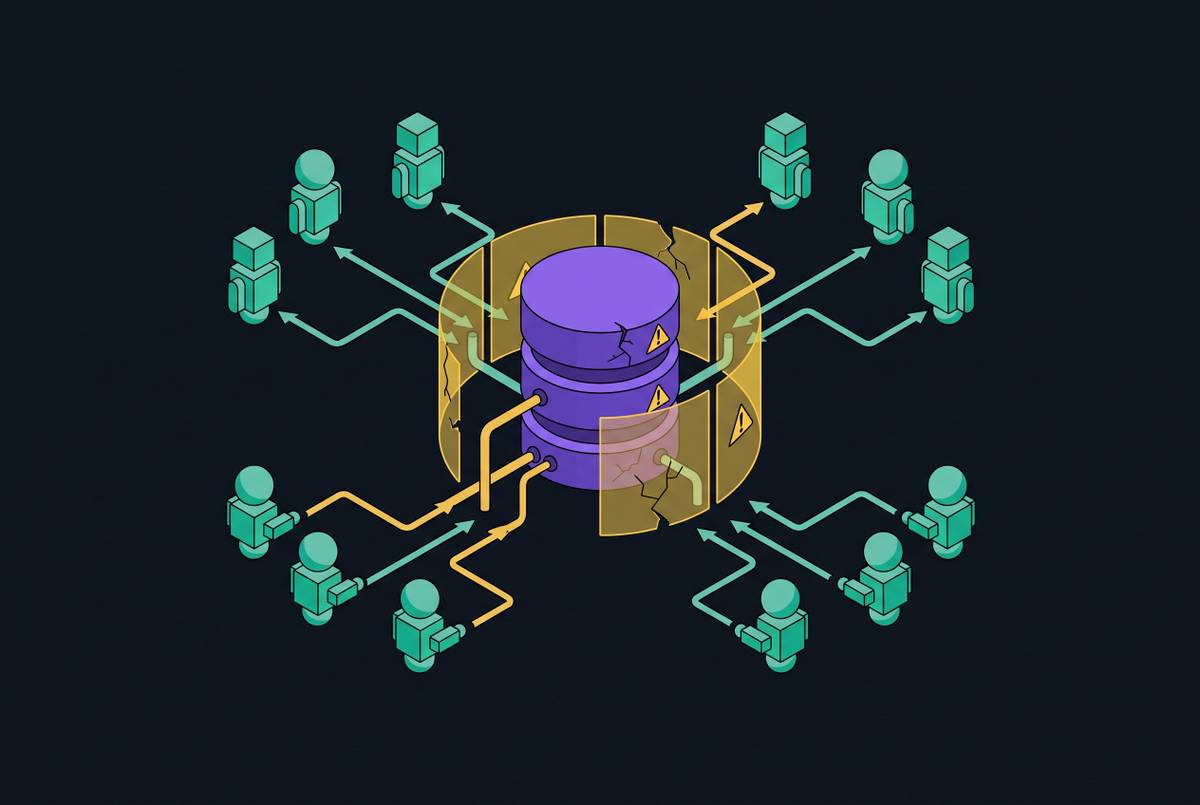
Connecting an agent to production Postgres is no longer the difficult part. An agent can reach data with almost no friction, but a successful connection establishes nothing about its understanding of that data. Enterprise schemas contain abbreviations, implicit joins, and domain-specific filters that a model cannot recover reliably from column names. These are gaps in business knowledge. When an agent fills them through inference, it can invent tables, construct incorrect joins, or omit filters while producing an apparently coherent answer.
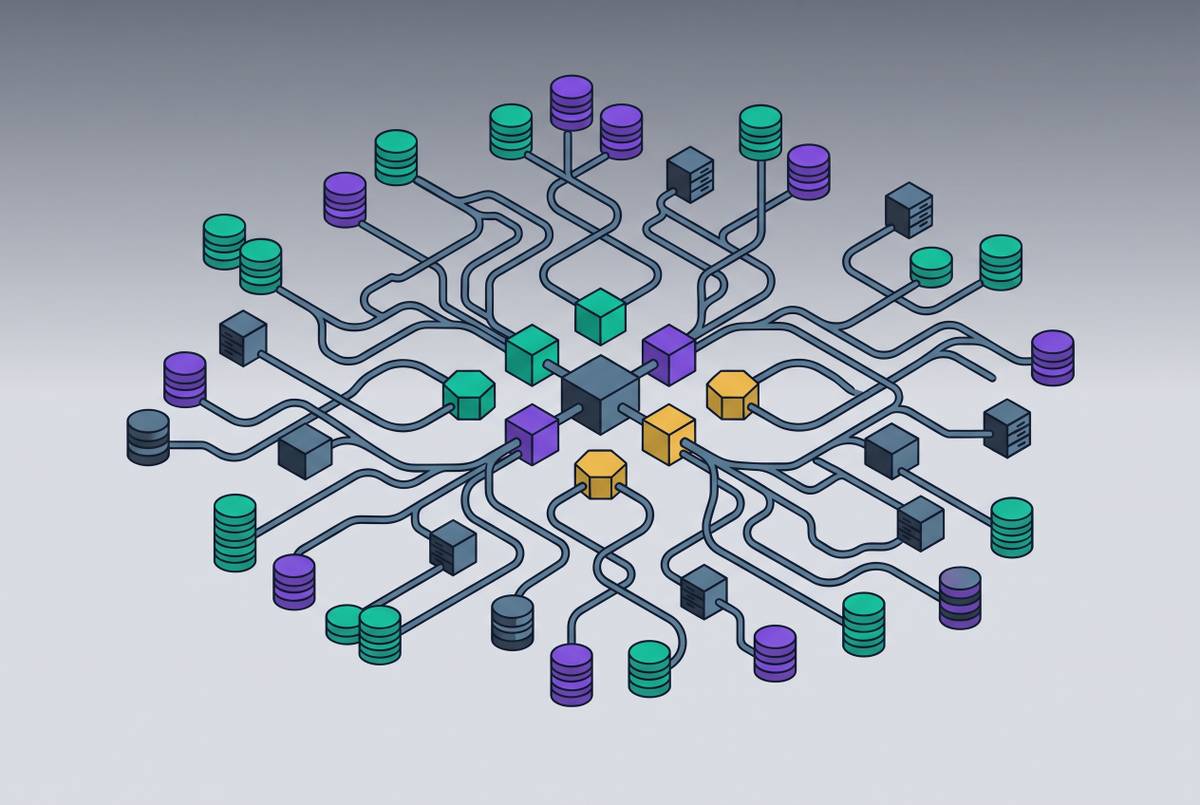
The cost grows when those assumptions are repeated at machine speed. When three analysts each have a different definition of a conversion event, their answers already need to be reconciled, and an agent cannot resolve that disagreement by querying faster. It needs a definition set by a human before it starts the calculation. Otherwise, automation turns an unresolved business question into a stream of confident answers whose differences remain hidden until someone compares them.
What metric drift looks like in a Supabase project without governed definitions
Consider two engineers answering a question about Q2 revenue from the same Supabase tables. One writes SUM(revenue), while the other writes SUM(amount_captured). Both expressions can be valid SQL without answering the same business question. Neither query has to fail for the reports to disagree. The disagreement lies in what each engineer has decided revenue means.
Finance, sales, and product may use different definitions of core terms, and those definitions can change over time. Domain-specific definitions are not inherently wrong, but an agent needs to know which applies to the question being asked. Applying the wrong revenue definition to a reconciliation produces a result that looks authoritative because its calculation is technically sound. This is metric drift without a database error.
For a startup, the first visible consequence may be lost trust, even without a formal audit failure. An investor asks for numbers, and two people return different answers from the same database. Supabase’s growth makes this exposure more pressing. Database launches grew dramatically year over year, with more than half of new databases being launched by AI tools. Agent access is expanding faster than the governance practices around those tables, leaving more opportunities for unrecorded assumptions to become reported facts.
Why Supabase's architecture makes raw agent access a performance and security risk, not just an accuracy risk
Even when an aggregation is defined correctly, it can be unsafe to run against production. Supabase is built on Postgres, a row-oriented transactional database rather than a system optimized for analytical aggregations. Analytical scans create I/O pressure on the read and write workloads that applications depend on. When transactional and analytical load share connections, agents can use up the connection pool as well as compete for database resources.
Access privileges create a separate operational risk. An agent given a shared application login inherits the reach of that role, so a bad prompt can expose private tables or, with sufficiently broad permissions, modify production data. The documented Replit incident, in which an AI agent deleted a company database, shows what can happen when an agent has destructive access. The system must restrict what the agent can reach, rather than depend on what it has been told not to do.
Supabase row-level security helps restrict which rows a credential can read. It does not define the metric those rows represent. RLS therefore cannot determine which aggregation, business filter, or relationship is appropriate for a revenue question. Supabase’s OpenTelemetry integration and Metrics API provide visibility into CPU, I/O, WAL, connections, and query statistics, but that visibility addresses another part of the problem. Observability diagnoses the resulting load after an agent generates it.
What a semantic metrics contract is and what it must contain to function as a boundary
A semantic metrics contract is a machine-readable, governed definition of what a metric means and how it may be accessed. It specifies the calculation, permitted dimensions, and policies that apply to its use. The contract is an enforceable analytical boundary. A semantic layer holds these contracts so that consuming tools work from approved definitions rather than reconstructing business logic independently.
Four building blocks give that boundary its substance. Entities and relationships define business objects such as Customer, Order, Subscription, and Store, mapped to the relevant fact and dimension tables. Metrics and time logic specify calculations, grains, filters, and time semantics. Revenue might therefore mean sum(order_amount) where order_status = 'completed'. Governance supplies row-level, column-level, and object-level access rules, while synonyms and natural-language metadata map a phrase such as “gross margin percentage” to its governed calculation.
A SQL view can encode a calculation, but a calculation alone is not this contract. Scattered views and dashboard formulas can remain duplicated, weakly owned, or undocumented across tools. The governed definition instead has version control and CI testing, and multiple consumers query it as one definition. Ownership and provenance give the agent the rest of what it needs to judge trust. The agent receives not only a number, but the meaning, responsible owner, and applicable policies needed to use that number appropriately.
Why the contract must sit above the table layer and be resolved before query time, not at it
If an agent decides joins, filters, and aggregations at query time, each run recreates the analytical logic. The choices can change from one run or agent to the next. A smart query router leaves that uncertainty in place if it still relies on inference for business meaning. The contract must settle those choices before execution.
Materialized views are a useful step toward that separation because they move calculation out of each individual request. They are not the complete governance boundary. The missing elements are the shared metric definition, ownership, permitted dimensions, and policies that govern every consumer of the result. The difference matters more when a layer built for people using dashboards has to handle many queries in a single agent run. When machines make requests over and over at speed, they change both the workload and the cost of using definitions that disagree.
The appropriate analytical unit is therefore a pre-calculated, governed dataset that both dashboards and agents can query. A governed copy separates those requests from the production Postgres instance, with Parquet files queryable through DuckDB as one possible implementation. Access rules belong in that layer’s data path. The contract must span both semantics and context, binding metric meaning to lineage, ownership, access policies, and an audit trail. The practical test is whether Claude and a dashboard obtain their answers from the same definition without separately interpreting what the business is asking.
How do AI agents query Supabase through MCP without direct database access?
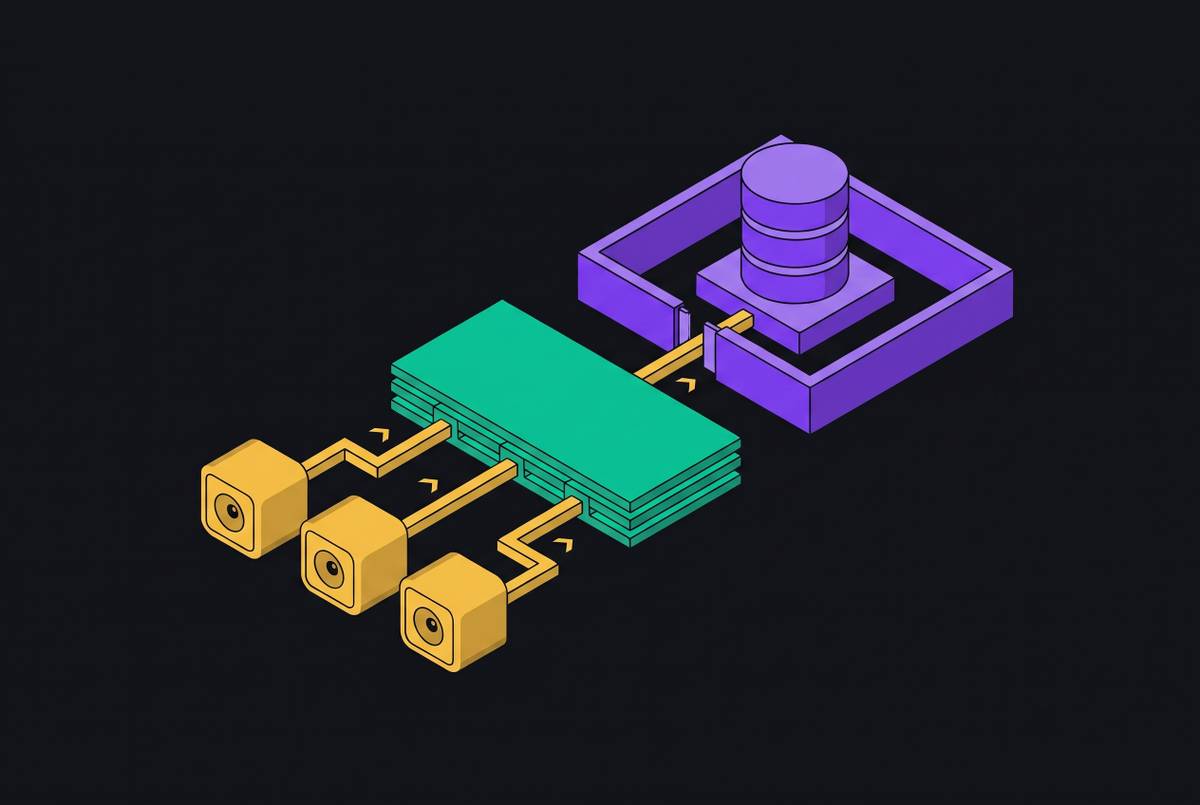
The agent calls an MCP server that sits in front of the governed analytical layer and queries pre-modeled datasets in place of production tables. Its response includes the metric value, provenance, and the access policy under which it was served. The agent can retrieve a contract, ask for allowed dimensions, and submit a governed query. Production is outside the agent’s query path.
MCP itself does not supply those guarantees. Its three primitives, Tools, Resources, and Prompts, provide a transport for whatever the server has been built to serve. Many servers expose raw data rather than governed context, so connecting production Postgres through MCP can still leave an agent unable to interpret the data reliably. The relevant server-selection criteria are therefore support for governed datasets, enforceable access policies, readable provenance, and metric definitions the agent can cite.
The July 2026 MCP specification revision made the protocol layer stateless, so requests can reach any server instance behind a plain round-robin load balancer. By August 2026, Anthropic, OpenAI, and cloud infrastructure vendors had standardized their support for MCP, making this pattern portable across agent frameworks. The backend need not belong to one interface. It can serve agents and human applications through MCP or API from the same definitions, following the headless analytics pattern.
What the contract enables for agents beyond preventing errors — auditability, trust, and reasoning quality
Approved logic gives an agent a stronger foundation for reasoning. Instead of guessing from raw fields, it consumes defined joins, filters, measures, and time semantics. That removes an unnecessary source of ambiguity before the agent interprets the result or explains it to a person. The definition also makes the answer inspectable. A reviewer can examine what calculation was used rather than try to reconstruct the agent’s assumptions from generated SQL.
Auditability follows when the contract records the definition used, the applicable access policy, and the governed dataset behind the answer. These are the same forms of accountability expected of a human analyst, applied to agent actions. They also distinguish a production analytical service from a convincing demonstration. Gartner analysts predicted earlier in 2026 that agentic analytics projects relying solely on MCP without a consistent semantic layer would fail at a high rate.
Metrics pushed into Slack or email can use the same pre-modeled definitions as metrics retrieved by an agent or displayed in a dashboard. Delivery changes, but the analytical foundation does not. When Claude and a human dashboard read from one governed definition, consistency becomes a property of the system rather than an agreement between individual query authors. That is the resolution of metric drift, a single source of truth enforced across human and machine consumers.
How a Supabase team implements the governed layer in practice — without ETL or a separate warehouse
For a Supabase team, the implementation starts with Postgres as the analytical home. The recommended approach adds a governed layer above its tables without the need for schema changes, ETL pipelines, or separate warehouse infrastructure. Postgres remains the source, while agents consume the pre-modeled results.
The first decision is to define each contract explicitly, giving the metric a name, calculation, grain, allowed dimensions, and access policy. Those definitions are then pre-calculated into governed datasets at the data layer rather than recomputed for every dashboard or agent request. A single MCP server exposes the governed outputs. It gives agents analytical context without raw table access, so production stays outside their data path. Human dashboards and reports consume the same outputs so that the layer acts as a data factory for both audiences.
Supabase provides infrastructure that supports this separation. Its compute tiers offer substantial CPU and RAM, Supavisor handles connection pooling, and read replicas can provide the read surface used to prepare governed datasets. Read replicas keep that analytical load off the production primary, while pooling addresses connection management. These controls have distinct responsibilities within the architecture. With the governed contract enforced in the serving path, an agent cannot bypass it through a production credential, and dashboards do not silently substitute their own calculations for the approved definitions.